

Sustainable Development Goals Related to Our Environment Initiatives
Our Environmental Policy
The Sakae Riken Group is committed to advancing sustainable automobile development by creating products and implementing production systems designed to minimize environmental impact. These initiatives ultimately contribute to the achievement of the Sustainable Development Goals (SDGs). To support this mission, we are focused on establishing and enhancing our environmental management systems, guided by the following principles of our environmental policy.
Environmental Policy
We contribute to the achievement of CN and SDGs toward realization of a sustainable society,
proactively addressing the environmental issues surrounding us, and
aiming to achieve harmonization between business activities and the global environment.
- We develop, design, manufacture and sell plastic products for automobiles and home appliances, and will continue to provide earth-friendly products through proactive innovation and production activities with lower environmental impacts.
- We are ISO14001 certified and committed to promoting environmental management initiatives from a life cycle perspective. We strive to improve our environmental performance by addressing the risks and opportunities surrounding our business.
-
In our environmental management initiatives, we identify how our business affects the environment by considering technical and economic factors. We then set environmental goals and implement action plans continuously. Through these efforts, we are committed to conserving water resources, preventing air and soil pollution, using resources sustainably, mitigating climate change, conserving biodiversity, and cooperating with local communities.
We will strive to:- monitor and manage major facilities and processes that affect the environment, ensuring compliance with relevant environmental laws and regulations and preventing environmental accidents.
- minimize, reuse and recycle waste.
- promote resource and energy conservation.
- technology development and product delivery with low environmental impact.
- manage chemical substances and conflict minerals contained in our products.
- We are committed to educating all employees and key suppliers on environment issues, communicating our environmental policy, and actively promoting environmental awareness.
This environmental policy is available to external parties upon request.
October 1, 2024
Environmental Management
We implement environmental management systems in which all employees are well-informed about the environmental impact of their work, the benefits of improving environmental performance, and their individual roles in ensuring the system's effectiveness. Every team member is fully committed to advancing these initiatives.
How Our Environmental Management Works
Our Environmental Management Systems
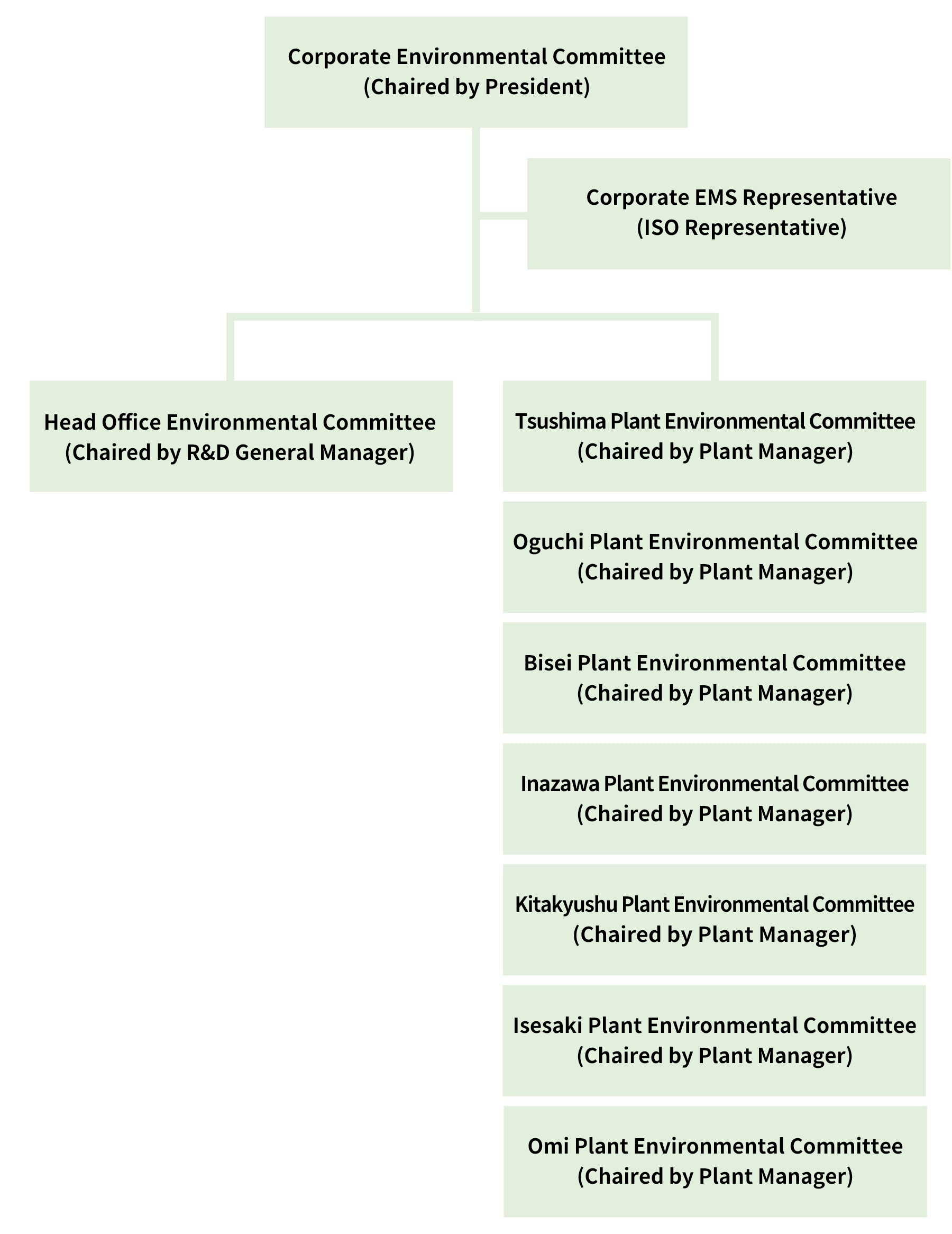
To promote environmental management throughout the organization, we have established environmental committees at our head office, technical center, and each plant, respectively. To ensure effective environmental management, we have established and implemented an Environmental Manual in each department. Our overseas subsidiaries operate independently, each with its own management systems.
ISO 14001 Environmental Management Systems
ISO 14001 is an international standard for Environmental Management Systems (EMS), designed to support effective business operations while minimizing environmental risks. This certification demonstrates to all stakeholders that the certified company is committed to fulfilling its corporate social responsibility. We believe the key to successfully establishing and maintaining an EMS lies in the continuous exchange of ideas and pursuit of improvement, focusing on the organizational goals and environmental protection.
In pursuit of our environmental policies and objectives, we are committed to the continuous enhancement of our management systems through the organization-wide implementation of the PDCA cycle.

ISO 14001 Certified Locations
In Japan
- Head Office
- Technical Center
- Tsushima Plant
- Oguchi Plant
- Inazawa Plant
- Bisei Plant
- Kitakyushu Plant
- Isesaki Plant
- Omi Plant (to be certified in 2026)
Overseas
- Eakas Corporation
- Eakas Arkansas Corporation
- Sakae Riken (Wuxi) Technology Co., Ltd.
- PT. Sakae Riken Indonesia
- Sakae Riken Polyplastics India Pvt.Ltd.
Medium Term Environmental Goals
Operation of Environmental Management Systems Aligned with Company Policy
Implementation of Environmental Improvement Initiatives in Our Core Business
Advancement of Environmental Improvement Practices
Promoting Environmentally Friendly Design through Visualization of CO₂ Emissions
Management Items
- Improvements to the “Key Points at Planning Stage” based on the Design Environmental Impact Assessment Sheet
- Reduction of CO₂ emissions from products
Enhancing Stakeholder Communication
Management Items
- Violations of Laws and Regulations
None reported. - Complaints from Stakeholders
No unresolved complaints. - Delays in Regular Reports to Public Authorities
None recorded.
Strategies for Mitigating Global Warming
Targets:
To reduce CO₂ emissions by 46% by 2030
To reduce CO₂ emissions to 25.5 kt-CO₂ or less
Baseline:
47.3 kt-CO₂ (Total CO₂ emissions in FY 2018)
Strategies for Reducing Waste and Conserving Resource
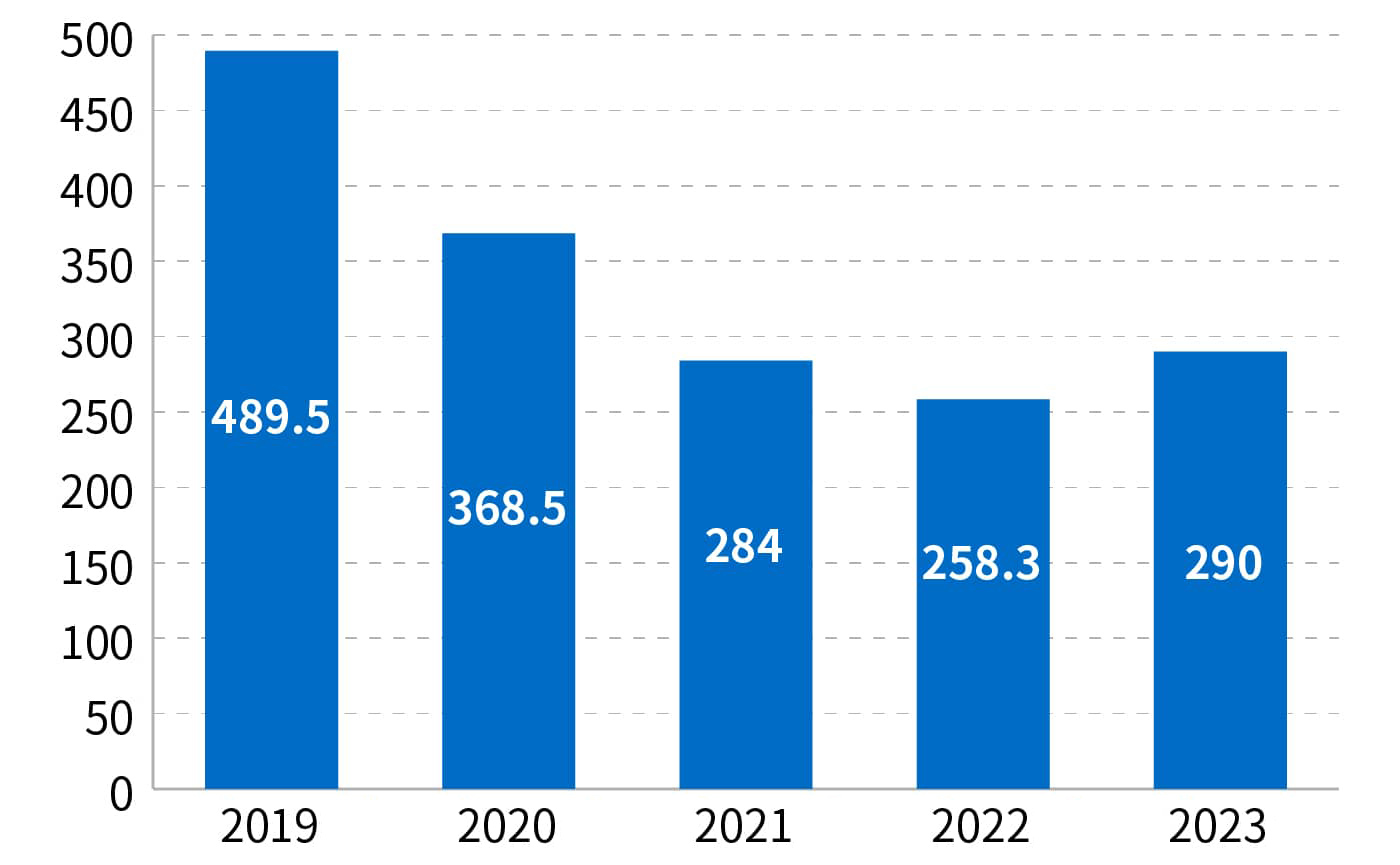
Reduction of landfill and incineration waste per unit of production value
| Management Item | Target |
|---|---|
| Other industrial waste containing plastics | Reduced to under 250 tons per year, including waste plastics |
Waste Management Trends
Reduction of Environmentally Harmful Substances
Reduction of VOC emissions
Reducing emissions of three PRTR substances (toluene, xylene, and ethylbenzene) per unit of production value
Our Commitment to a Decarbonized Future
Since the adoption of the Paris Agreement at the United Nations Framework Convention on Climate Change on November 4, 2016, global concern about climate change has continued to intensify. In alignment with the Sustainable Development Goal to "take urgent action to combat climate change and its impacts," and in response to former Prime Minister Suga’s declaration of net-zero greenhouse gas emissions by 2050 (announced on October 26, 2019), we began our journey toward building a decarbonized society in 2019.
To achieve carbon neutrality and contribute to a more sustainable future, we have established clear milestones for reducing CO₂ emissions. As a company playing a part in the global supply chain, we recognize our responsibility and are committed to implementing concrete measures that reflect our role in creating a low-carbon economy.
Current Initiatives (FY 2024, as of September 2024)
CO₂ Emissions:17.2Kt-CO2
Achieved a 63.6% reduction compared to FY 2018
- We are implementing significant improvements in each facility to enhance productivity through the adoption of smart factory initiatives, such as automation and robotization, leveraging AI and IoT.
- We have upgraded some of the equipment to energy-saving models at our head office, technical center, and plants. These upgrades were methodically implemented in targeted areas where cost-effectiveness was confirmed.
- In addition to the aforementioned improvements, the introduction of green power and solar power generation systems will accelerate the achievement of the FY 2030 target.
Future Initiatives (For FY 2030)
Milestone 2030
Target CO₂ Emissions:
To reduce CO₂ emissions by 46% compared to FY 2018
-
Renewable Energy
From FY 2024 to FY 2030, while working toward the emission targets set for FY 2030, we will focus on reducing energy costs by upgrading to energy-efficient, high-capacity production equipment and expanding the adoption of solar power generation systems.
- Carbon Neutrality Initiatives throughout Our Supply Chain
Ultimate Goal (For FY 2050)
Target 2050
Target CO₂ Emissions:
To reduce CO₂ emissions by 100%
To achieve a zero-carbon (decarbonized) society
- By FY 2030, we will have established an energy-saving and high-production capacity system. By FY 2050, we aim to increase the share of green electricity to 100% of our total electricity consumption and additionally begin using green gas, with the ultimate goal of achieving a 100% reduction in CO₂ emissions.
Zero Carbon City Promotion Partner of Inazawa City
In January 2024, we were certified as a promotion partner of Zero Carbon City Inazawa. This award recognizes our efforts in installing solar panels at our Inazawa Plant, which is part of our broader strategies to achieve our zero carbon emissions target.
Sustainable Wastewater Treatment
Plating Wastewater Management
Our wastewater monitoring programs are designed to ensure that no harmful substances are discharged. Wastewater from plating processes is collected in designated tanks. In these tanks, toxic substances are coagulated and extracted as sludge. Then, the water quality control system properly treats the water before it is discharged into rivers.
Plating Wastewater Treatment Process at Inazawa Plant


Paint Overspray Management
Our paint booths are equipped with collector panels that use running water to capture overspray. Unwanted paint particles are absorbed into the circulating water. These particles are then coagulated by special agents, extracted, and recovered as sludge. This process effectively prevents the discharge of paint sludge into the atmosphere and nearby rivers.
Paint Overspray Treatment Process at Inazawa Plant
Paint mist collector panels in the paint booths
Circulation water tanks and scrubber systems
Paint coagulants feeder and sludge recovery systems
Environmentally Friendly Plant Equipment
Energy-Saving Molding Machines
We have been making a consistent effort to replace conventional equipment with energy-saving injection molding machines. Most of our injection molding machines are electrically powered.

Water Reuse
We have installed pure water systems in our facilities and reuse approximately 30% of our wastewater. Furthermore, we employ a recirculating cooling water system for our production equipment to minimize water usage.

Recycling Station
Valuable materials discharged from our plants are collected at recycling stations on our premises and handed over to recycling companies. We handle hazardous waste in accordance with the Poisonous and Deleterious Substances Control Act. If we are unable to process it in-house, we entrust it to specialized waste disposal companies. We also provide responsible personnel with training on waste disposal procedures and ensure strict compliance with relevant laws and regulations, including the Water Pollution Control Act.

